
Loading...
Serving Fort Smith, AR and surrounding areas. (479) 377-0983
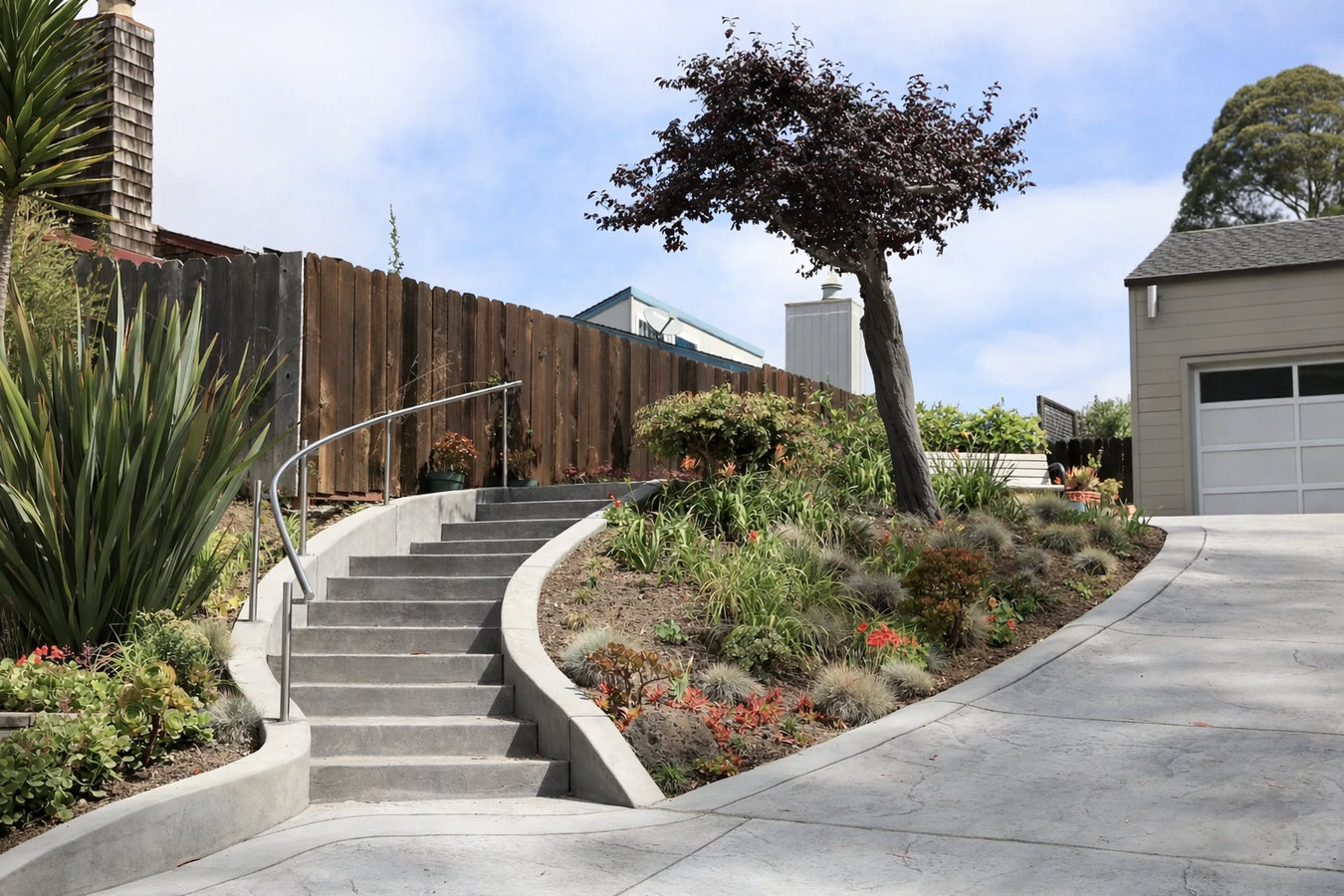
Cracked, tilting, or pulling away from the house - old concrete steps are a fall hazard. We build new steps that handle Fort Smith soil and winters without cracking apart.
Concrete steps construction in Fort Smith involves removing the old steps, preparing the base properly, forming and pouring reinforced concrete, and finishing with a textured surface for grip in wet weather. Most residential projects take one to two days to form and pour, then three to seven days of curing before the steps can be used safely.
Fort Smith has a large number of homes built between the 1940s and 1980s, and many of those homes still have their original concrete steps. Those steps were often poured without the reinforcement or base preparation that modern work includes, and the combination of clay soil movement and hard winters has caught up with them. If your steps are cracking, rocking, or have pulled away from the house, replacing them now is safer and less expensive than waiting. A lot of homeowners who replace their steps also take the opportunity to add a new concrete sidewalk at the same time to complete the front entry.
These four signs point to steps that are past the point of routine repair.
Cracks wider than a hairline, cracks you can feel with your finger, or cracks that allowed pieces to shift or break off are a sign the concrete has been compromised. In Fort Smith, the combination of clay soil movement and freeze-thaw cycles accelerates this damage, so what starts small can become a structural problem within a season or two.
Stand on the top step and shift your weight side to side. If it moves at all, or if you can see a gap between the steps and your home, the base has shifted. This is common in Fort Smith older neighborhoods where original steps were poured on uncompacted soil that has since settled. A rocking step is a fall hazard and will not stabilize on its own.
Walk out right after a rainstorm and look at where the water goes. Each tread should drain forward and off the edge. If water is sitting in low spots, the steps were poured without the right slope or have settled unevenly. Standing water speeds up surface wear and creates a slip hazard, especially when winter temperatures drop.
Spalling is when the top layer of concrete starts to flake or chip away in thin pieces - it often looks like the surface is peeling. In Fort Smith, this is frequently caused by freeze-thaw cycles working on concrete that was never properly sealed. Once spalling starts, it tends to spread, and a spalled surface is rough and harder to keep clean and safe.
We build poured concrete entry steps for front doors, back doors, and garage entries, and we match the scope to what your property needs. Every project starts with removing the old steps, excavating to a stable depth, compacting the ground, and laying a gravel base for drainage. Steel reinforcement goes inside the forms before any concrete is poured - you will not see it once the job is done, but it is what keeps the steps from cracking apart under heavy use and temperature swings. Surface finish is always textured for grip in wet and icy weather. When the steps project is part of a larger front entry renovation, we can tie in slab foundation building or other flatwork as part of the same visit.
For homeowners who want a decorative finish rather than a plain brushed surface, we offer stamped textures and border details that can complement brick or stone elements already on the home. We also build landings as part of the same pour, whether you need a simple flat platform at the top or a larger pad that connects to a patio. If a new sidewalk from the steps to the street makes sense for your project, we handle that too - ask about concrete sidewalk building when you call.
Best for homeowners replacing deteriorating original steps or adding new access to a door that currently lacks a proper entry.
Best for doors that need a wider platform at the top for safety, furniture, or connecting to an adjacent patio or porch area.
Best for homeowners who want a safe, durable surface that performs in rain and ice without a lot of ongoing maintenance.
Best for homeowners who want new steps to match or complement existing brick, stone, or decorative elements on the home.
Fort Smith has a significant number of homes built between the 1940s and 1980s, particularly in neighborhoods like Midland, Cavanaugh, and the areas around Creekmore Park. Many of these homes still have their original concrete steps, which were often poured without modern reinforcement or proper drainage planning. The clay-heavy soil throughout this part of Arkansas expands and contracts with every wet and dry cycle, and 40 to 50 years of that movement has worked against steps that were not built with it in mind. Adding Fort Smith winters - with temperatures that regularly drop below freezing and occasional ice storms - means that water in small cracks keeps working until the damage is visible on the surface. Replacement is almost always the smarter investment over repeated patching once that process starts.
Homeowners in Van Buren and Greenwood deal with the same soil conditions and weather patterns we see across the Fort Smith area. We bring the same base preparation and reinforcement approach to every job in the region, because shortcuts that might hold up in a mild climate will not hold up here. The best window for pouring concrete steps in Fort Smith is spring or fall - moderate temperatures let the concrete cure at a steady pace and give the finished steps the best chance of a long life.
Here is what the process looks like from first call to finished steps.
When you reach out, we ask a few quick questions - how many steps, whether there is a landing, whether you want a full replacement or a repair assessment. We reply within one business day and schedule a free visit to look at the site and give you a written estimate.
If your project requires a permit from the City of Fort Smith, we handle pulling it before work begins. This adds a few days to the timeline but is not something you need to manage yourself. Once the permit is in hand, we confirm your start date and let you know which entry will be blocked and for how long.
We remove the old steps, excavate to a stable depth, compact the soil, and lay a gravel base for drainage. Then we build the forms and place steel reinforcement inside before any concrete is poured. This prep work is what determines whether your new steps last 30 years or 5.
The pour is typically a single session. The surface is textured while the concrete is still workable, and the area is marked off during curing - plan on keeping the entry blocked for three to seven days. Once cured, we apply sealer and do a final walkthrough to confirm the surface, drainage, and step heights before calling the job done.
Free on-site estimate. No obligation. We handle permits if your project requires one.
(479) 377-0983Every set of steps we build includes rebar or wire mesh placed inside the forms before the concrete goes in. You will not see it once the work is done, but it is what keeps steps from cracking apart under heavy use or temperature swings. If a quote seems unusually low, ask whether reinforcement is included - that is often what is missing.
Fort Smith clay soil moves. It swells in the wet season and shrinks in the dry season, and that movement is the main reason steps crack, tilt, and pull away from houses in this area. We excavate to a stable depth, compact the subgrade, and lay a gravel drainage layer before forming - the same approach on every job regardless of size.
For projects that require a permit from the City of Fort Smith Building Services, we handle the filing and build the work to pass inspection. A permitted and inspected job protects you legally and adds to your home value when you sell - unpermitted work can become a problem during a buyer inspection.
We look at your existing steps and tell you plainly whether repair makes sense or whether replacement is the better investment. In Fort Smith older neighborhoods, we see a lot of steps where the base has already failed - patching the surface on those just delays the replacement by a year or two and costs money twice. We do not recommend work you do not need.
New concrete steps from Fort Smith Concrete are built to handle this climate and this soil from the base up. That is what makes the difference between steps you forget about for 30 years and steps you are patching every other spring.
Pour a new concrete slab for a garage, addition, or outbuilding on the same property.
Learn moreConnect your new entry steps to the street or driveway with a properly formed concrete sidewalk.
Learn moreSpring booking fills up quickly - call or send a message now to lock in your start date before the summer heat makes scheduling harder.