Loading...
Serving Fort Smith, AR and surrounding areas. (479) 377-0983
Fort Smith Concrete serves Fayetteville, AR with stamped concrete, driveway building, patio construction, and retaining walls - and we respond to every inquiry within 1 business day.
Fayetteville has more variety in its housing than almost any other Arkansas city - craftsman bungalows near Leverett Avenue, post-war homes around Wilson Park, and newer subdivisions on the south and west sides all have different concrete needs. The city sits higher in elevation than most of Arkansas, which means colder winters and more freeze-thaw cycles. We know how that affects concrete here and we build accordingly.
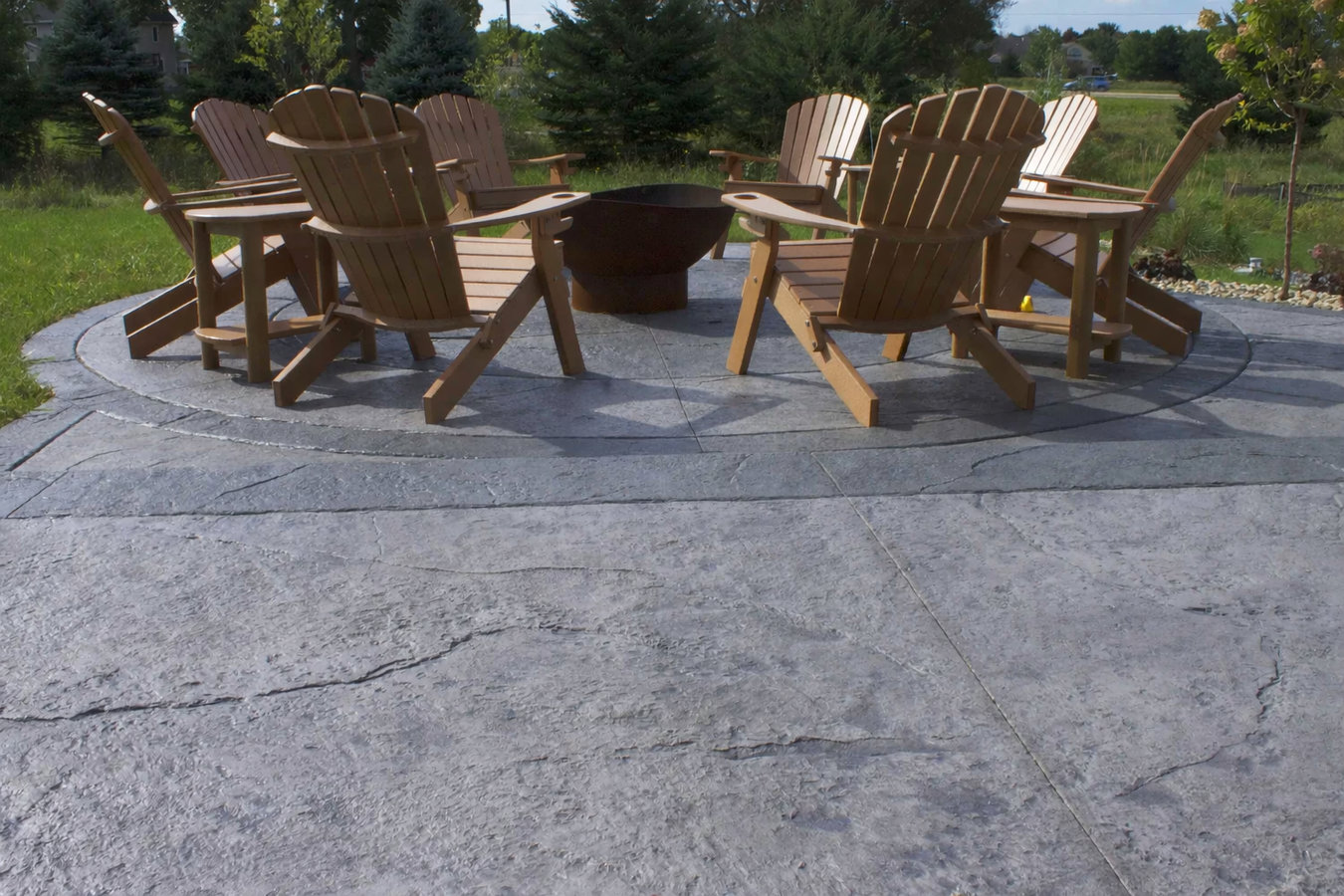
Fayetteville residents spend real time outdoors - the city has over 50 miles of trails, and the Razorback Greenway draws people outside year-round. That outdoor lifestyle shows up in how homeowners invest in their patios and pool decks. Plain gray concrete gets the job done, but a stamped surface holds up just as well under Fayetteville's hot summers and cold winters while looking significantly better. Our stamped concrete work is scheduled during spring and early fall when temperatures give the crew the working window needed to stamp the pattern evenly - rushing stamped concrete in extreme heat or cold is one of the most common ways that finish quality gets compromised.
A significant share of Fayetteville homes were built before 1980, particularly in neighborhoods near the University of Arkansas campus and the Dickson Street corridor. Those driveways have been through more than three decades of Fayetteville freeze-thaw cycles, and most were never sealed. Homes on the south and west sides built in the 1990s and early 2000s are now hitting the 20-to-30-year mark where first-round concrete replacement is typical. We build driveways with the clay soil conditions in Washington County in mind - proper excavation and gravel base preparation, not just a pour on top of whatever is there.
Fayetteville sits in the Ozark foothills, and sloped lots are common across the older parts of the city - particularly on the north side near Lake Leatherwood and in hillside neighborhoods west of campus. A concrete retaining wall holds back the grade and prevents soil from eroding toward the foundation or driveway. Walls on sloped Fayetteville lots need to be built to handle the pressure of both the grade and the clay soil behind them, which shifts with every rain cycle.
Fayetteville's outdoor culture and rising home values make a concrete patio one of the most practical improvements a homeowner can make. The city's springs and falls are long and comfortable, and a flat, well-drained patio gets used far more often than a muddy yard or a deck that needs annual maintenance. On Fayetteville's wooded and sloped lots, getting the drainage grade right is especially important - water that runs toward the foundation after every storm creates problems that compound over time.
Fayetteville's older neighborhoods have sidewalks that have been pushed out of alignment by decades of tree root pressure and freeze-thaw movement. Heaved or sunken panels create trip hazards and signal that the surrounding panels are not far behind. We replace damaged sections with correct slope for drainage and control joints placed to manage future movement - so the repair holds rather than becoming a recurring problem every few years.
Fayetteville's elevation - around 1,400 feet, higher than nearly any other city in Arkansas - gives it a different climate than the rest of the state. The city averages 10 to 15 inches of snow per year, and winter temperatures can drop into the single digits during cold snaps. More importantly, temperatures in January and February swing above and below freezing multiple times in a single week. That repeated freeze-thaw cycle is the main reason concrete in Fayetteville deteriorates faster than in lower-elevation Arkansas cities. Water gets into the small pores of an unsealed slab, freezes overnight, expands, and chips the surface from the inside. Do this 20 or 30 times in a winter and the damage becomes visible.
Fayetteville's terrain adds another layer of complexity. The city sits in the Ozark foothills, and residential lots - especially in the older and northern parts of town near Lake Leatherwood City Park - are frequently sloped, wooded, or both. Clay-heavy Washington County soil does not drain quickly, and water that pools around a foundation or sits under a slab after heavy spring rain puts pressure on that slab from below. The combination of clay soil movement, steep lot grades, and harder winters makes Fayetteville one of the more demanding environments for concrete work in the region.
Our crew works in Fayetteville as part of our northwest Arkansas service area, and we pull permits through the Fayetteville Development Services department for qualifying projects. Homeowners do not need to handle permit paperwork - we manage that before the first shovel goes in. Fayetteville's permit requirements cover driveways connecting to public streets, concrete near foundations, and any work that changes the drainage pattern on the property.
Fayetteville's geography splits roughly into older neighborhoods clustered around the University of Arkansas campus - including the streets near Dickson Street, Leverett Avenue, and Wilson Park - and newer development on the south and west sides off Highway 112 and Highway 71B. Those two environments have very different site conditions. The older north and central neighborhoods have mature trees, sloped lots, and aging concrete on tight footprints. The south-side subdivisions have flatter yards and newer homes that are approaching their first major concrete replacement cycle. We price and plan those two types of work differently.
Fayetteville is directly adjacent to Springdale to the north, and we serve that city as well. If your project is further into the metro toward Rogers, we cover that area too.
Tell us what you need and where your Fayetteville property is located. We respond within 1 business day. Concrete quotes - especially for stamped work or projects on sloped lots - cannot be given reliably over the phone. Site conditions, existing concrete, slope, and tree proximity all change what the job costs, and we need to see the property to give you a number you can plan around.
We visit your Fayetteville property, measure the work area, assess drainage and site access, and check any existing concrete for base conditions. The written estimate covers materials, excavation, base preparation, labor, sealing, and permit costs. Most projects in Fayetteville require a permit through the city, and we handle that application - you do not need to visit any office or fill out any forms.
We excavate the work area, remove old concrete or soft material, compact a gravel base, and build forms. On Fayetteville's sloped lots, drainage direction and wall footing depth get planned at this stage. This is also where any tree root assessment happens - large trees near the pour zone may need a root barrier to prevent future slab movement. The base preparation phase determines how long the finished concrete performs.
The concrete is poured, spread, and finished - with stamped work, the pattern is pressed in while the surface is still workable. We schedule summer pours for early morning to avoid Fayetteville's heat setting the surface before we can finish it. After the pour, foot traffic should stay off for 24 hours minimum and vehicles for 7 full days. We explain the full curing timeline before we leave the job site.
We serve all of Fayetteville and the surrounding northwest Arkansas area. Every inquiry gets a response within 1 business day - no pressure, just a straight answer on what your project will cost.
(479) 377-0983Fayetteville is the home of the University of Arkansas, which enrolls around 30,000 students and is the city's largest single employer. The university's presence shapes the city in ways that affect home contractors: a large share of the housing near campus has been through multiple tenant cycles, the central and older neighborhoods have a high concentration of pre-1960 homes, and the city has a strong base of long-term homeowners alongside a population that turns over more than most Arkansas cities. According to U.S. Census data, Fayetteville's population has grown to over 93,000, with median home values climbing well above the Arkansas state average. The neighborhoods closest to campus - the Dickson Street area, Leverett Avenue, and Wilson Park - are known for craftsman bungalows and two-story wood-frame homes built between the 1910s and 1950s.
The south and west sides of Fayetteville tell a different story. Neighborhoods off Highway 112 and Highway 71B saw heavy residential development from the 1990s through the 2010s, and those homes - brick-veneer and vinyl-sided ranch and two-story builds on modest lots - are reaching the age where driveways, patios, and sidewalks need their first major replacement. The city's trail network and outdoor culture mean residents invest in their outdoor spaces, and a well-built patio or resurfaced driveway gets genuine daily use here. If your project is nearby in Springdale or across the metro in Bentonville, we serve those areas as well.
Durable, professionally poured concrete driveways built to last through Arkansas weather.
Learn moreCustom concrete patios designed and installed for outdoor living and entertaining.
Learn moreDecorative stamped concrete that mimics stone, brick, or tile at a fraction of the cost.
Learn moreSafe, code-compliant concrete sidewalks for residential and commercial properties.
Learn moreSmooth, sealed concrete garage floors that resist oil, moisture, and heavy use.
Learn moreStained, polished, and textured concrete finishes that transform any surface.
Learn moreStructural concrete retaining walls that prevent erosion and maximize usable land.
Learn moreProfessional concrete floor pours for commercial, industrial, and residential spaces.
Learn moreSlip-resistant, heat-tolerant concrete pool decks built for safety and style.
Learn moreSolid concrete steps and stoops constructed for curb appeal and long-term safety.
Learn moreExpert concrete slab foundations poured level and strong for new construction.
Learn moreComplete foundation installation services for homes and commercial buildings.
Learn moreHeavy-duty concrete parking lots engineered for high traffic and low maintenance.
Learn moreProperly sized and reinforced concrete footings supporting decks, fences, and structures.
Learn moreFoundation raising and leveling to correct settling and structural issues.
Learn morePrecision concrete cutting and sawing for repairs, modifications, and utility access.
Learn moreServing these cities and communities.
Fort Smith Concrete serves Fayetteville and the surrounding northwest Arkansas area. Call or fill out the contact form and we will respond within 1 business day.