Loading...
Serving Fort Smith, AR and surrounding areas. (479) 377-0983
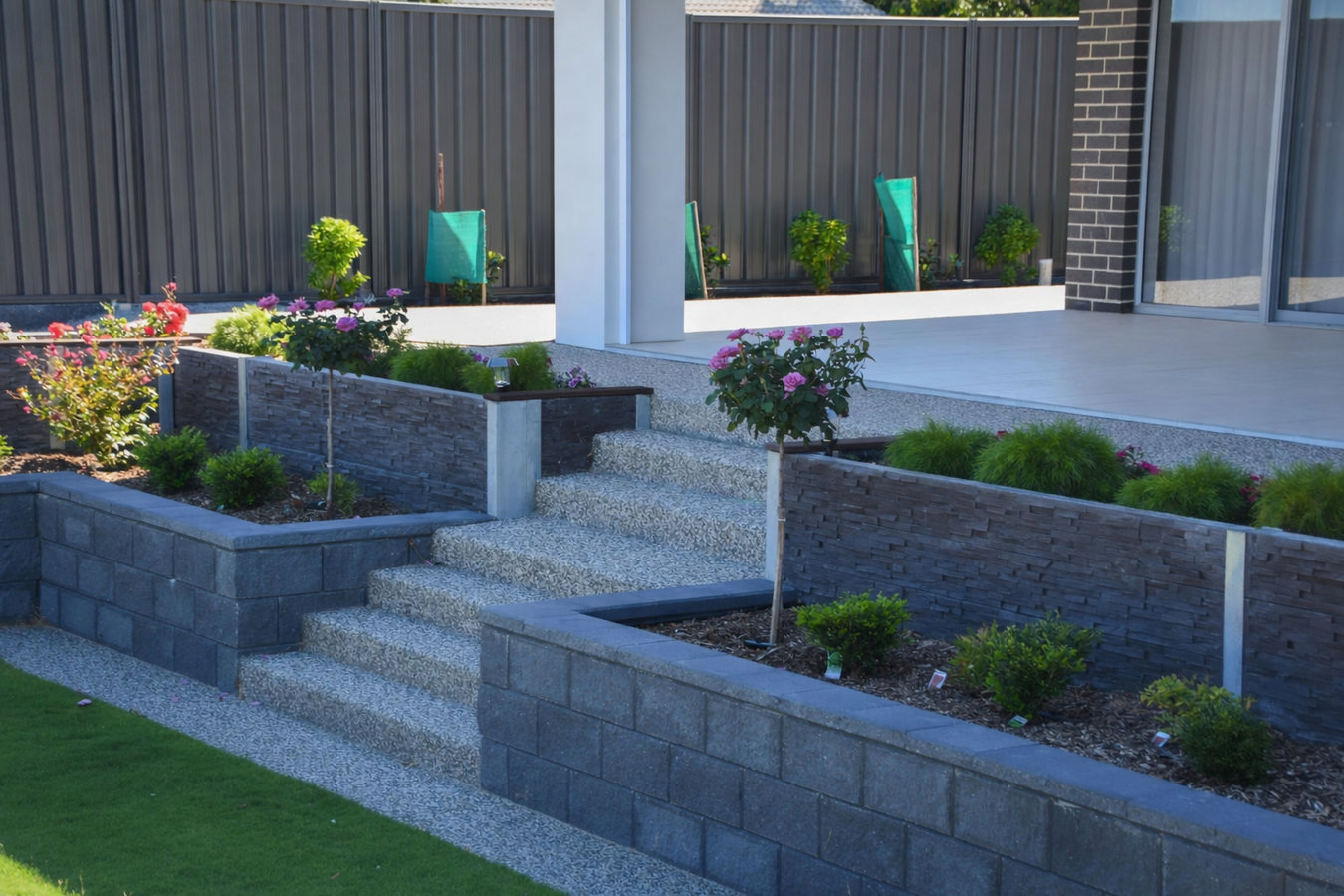
Your slope is eroding, your yard is unusable, or an old wall is starting to lean. We build concrete retaining walls that handle Fort Smith clay soil, heavy rain, and hard winters.
Concrete retaining walls in Fort Smith hold back soil on sloped yards, stop erosion, and create flat usable space where a hillside used to be. Most residential projects take two to five days on-site, with an additional week for the concrete to cure before backfill is added.
If you have a yard with an unstable slope, a wall that is starting to tilt, or a hillside that washes out every time it rains, this is the right service. Fort Smith's heavy clay soil and high annual rainfall make retaining walls a practical necessity for many properties here, not just a landscaping upgrade. Many homeowners who invest in a wall also pair it with concrete floor installation to finish a patio or usable outdoor area at the new grade level.
Here are four signs that point to a retaining wall being the right fix.
Bare patches, ruts, or small gullies forming on a slope after Fort Smith summer storms are signs of active erosion. The clay soil here moves fast when water hits it at speed. Every season without a wall makes the problem worse and puts nearby structures at risk.
If part of your yard is too steep to walk comfortably or too risky to mow without worrying about the equipment tipping, a retaining wall can turn that wasted slope into flat, functional outdoor space. Many Fort Smith homeowners in hillside neighborhoods have reclaimed full sections of yard this way.
A wall that is starting to tilt toward the street or showing wide cracks is telling you the pressure behind it is winning. Fort Smith clay soil swells with moisture and pushes hard against whatever holds it back. A leaning wall rarely corrects itself on its own.
If water collects against your house after a storm instead of draining away, a retaining wall with proper drainage can redirect that flow. This is especially common on Fort Smith properties where the yard slopes toward the house rather than away from it.
We build poured concrete walls and concrete block (CMU) walls, and we match the approach to your specific site. Poured walls are cast as a single solid unit, which makes them more watertight and well-suited for sites with high water pressure from heavy clay soil. Every pour includes a footing dug below the frost line and drainage material installed behind the wall before backfill goes in. When you want a finished surface that looks polished rather than plain, we can connect you with our concrete floor installation team to complete a patio or pad at the new grade.
Concrete block walls give us more flexibility on tight or uneven sites where forming a poured wall is difficult. They are built from individual blocks stacked and mortared together and can be stepped, curved, or built in sections to follow an irregular grade. If your project also needs stairs to connect the upper and lower levels, we handle that as part of the same scope. We also offer concrete steps construction as a standalone service if you need access built into a new or existing slope.
Best for high-load situations or sites where a watertight, single-unit wall is the most durable long-term choice.
Best for tight or uneven sites, tiered designs, or projects where construction needs to happen in phases.
Best for Fort Smith properties that see heavy seasonal rain or are built on clay-heavy soil with no existing drainage system.
Best for homeowners who need both grade retention and safe, permanent access between upper and lower yard levels.
Fort Smith gets around 47 inches of rain per year, and the area sees intense storms that can dump several inches in a matter of hours. On top of that, the city sits on expansive clay soil that swells when wet and shrinks in dry spells, putting constant pressure on anything holding a slope in place. A retaining wall built without accounting for both of those factors - drainage behind the wall, and a footing deep enough to stay put through freeze-thaw winters - is fighting against the conditions from day one. We build for Fort Smith's climate, not for a milder place. The American Concrete Institute sets the standards we follow for footing depth, mix design, and reinforcement in expansive soil conditions.
Older Fort Smith neighborhoods, particularly those near the Arkansas River bluffs and along the ridge lines in areas like Fianna Hills, have mature trees, established grades, and decades of soil movement already built in. Roots from large oaks can interfere with footings, and existing drainage patterns may need to be rerouted during construction. Our crews work regularly in these neighborhoods and know how to spot those complications during the estimate rather than after work starts. We serve homeowners across the area, including clients in Van Buren and Greenwood who deal with the same soil and rainfall conditions.
Reach out by phone or through our contact form. We reply within 1 business day to schedule a time to come look at your yard. We do not quote retaining walls over the phone - the slope, soil, and drainage situation all affect the price.
We walk the site, look at the slope and soil, and check what is nearby. You receive a written estimate covering excavation, materials, drainage, and cleanup. If your wall needs a City of Fort Smith permit, we handle pulling it before work begins.
The crew digs the footing below Fort Smith's frost line, sets forms or lays block, places drainage material behind the wall as it goes up, then pours or mortars. Most standard residential walls take one to three days to build.
After the wall cures for at least a week, the crew backfills, grades the soil, and cleans the site. We walk the finished wall with you, point out what to watch for over time, and answer any questions before we leave.
Free on-site estimates. Permits handled. Written price before work starts.
(479) 377-0983Every wall we build starts with a footing dug deep enough that Fort Smith's freeze-thaw winters cannot shift it. This is the step most homeowners cannot see once the wall is finished, which is exactly why it matters so much who does the digging.
Fort Smith averages around 47 inches of rain per year. We install gravel backfill and drainage pipe behind every wall so that water pressure does not build up after a hard storm. A wall without drainage in this climate is a wall on borrowed time.
We pull the required City of Fort Smith building permits and coordinate inspections so you do not have to make a single call to the permit office. An inspected wall is a documented wall, which protects you when it is time to sell. We are licensed with the Arkansas Contractors Licensing Board.
Our estimates cover excavation, drainage, materials, and cleanup - no single-line quotes that balloon once work starts. You know the full price before you commit to anything, with no surprise line items added after the fact.
Fort Smith Concrete focuses exclusively on concrete work, which means every crew member who shows up on your retaining wall project has done this specific type of work before in this specific type of soil. That focus shows in how walls hold up over time.
Pour a new concrete floor for the flat area your retaining wall creates - garage, patio, or workshop.
Learn moreAdd permanent concrete steps to connect upper and lower yard levels on a tiered property.
Learn moreFort Smith's spring rain season fills our schedule fast - call now to lock in your project date before the rush.